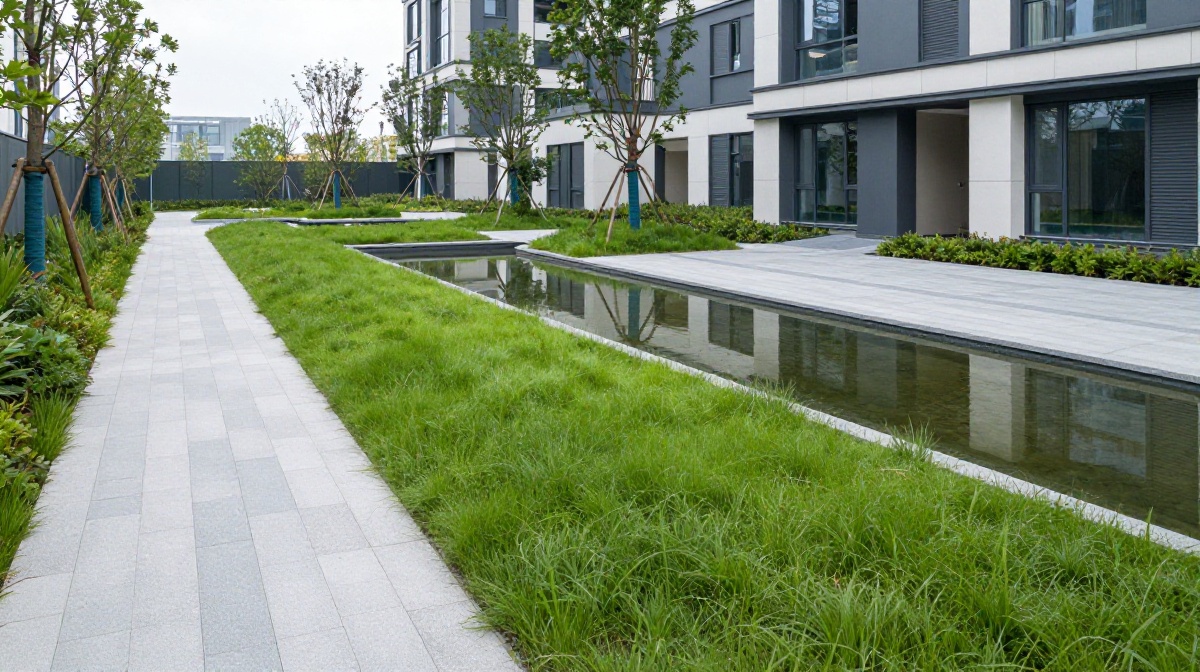
For decades, the standard approach to managing rainwater on a construction site was simple: get it into a pipe and move it away as fast as possible. This ‘out of sight, out of mind’ mentality worked for a while, but as our towns and cities have become more densely packed with concrete and tarmac, the old systems have started to fail. When heavy rain hits these impermeable surfaces, it has nowhere to go but into the overstretched Victorian sewer networks, leading to flash flooding and pollution in our local rivers. This is why a modern SuDS Strategy has become a non-negotiable part of the planning process in the UK.
A Sustainable Drainage System, or SuDS, is designed to mimic natural processes. Instead of fighting against nature by funneling water into narrow pipes, SuDS work with the landscape to manage water where it falls. By slowing the flow, filtering out pollutants, and allowing water to soak back into the ground, we can protect our infrastructure and improve the environment at the same time. It is no longer just a ‘nice to have’ feature; it is a fundamental requirement for almost every new development, regardless of size.
The core pillars of a successful SuDS Strategy
When you are putting together a SuDS Strategy, it is important to understand that it isn’t just about preventing puddles. A truly effective strategy is built on four key pillars that ensure the system provides the maximum benefit to the site and the surrounding community. These pillars are often referred to by Lead Local Flood Authorities (LLFAs) when they review planning applications.
- Water Quantity: Controlling the amount of water that leaves the site to ensure it does not exceed pre-development levels, thereby reducing flood risk downstream.
- Water Quality: Using natural filtration methods to remove sediment, oils, and heavy metals from runoff before it enters the groundwater or local watercourses.
- Amenity: Creating spaces that are useful and attractive for people, such as parks or green corridors that incorporate water features.
- Biodiversity: Designing systems that provide habitats for local wildlife, supporting a more resilient and varied ecosystem within the urban environment.
By balancing these four elements, a developer can move beyond simple compliance and create a project that actually adds value to the local area. A well-designed pond or a series of swales can become a focal point for a new housing estate, making the development more desirable to potential buyers while simultaneously solving the technical challenge of drainage.
Understanding the drainage hierarchy
One of the most critical aspects of developing a SuDS Strategy is following the drainage hierarchy. This is a sequence of preferences set out in national planning policy that dictates how surface water should be managed. You cannot simply choose the easiest or cheapest option; you must demonstrate that you have considered each level of the hierarchy in order, starting from the most sustainable.
The hierarchy typically follows this order: first, try to reuse the water on-site (such as through rainwater harvesting). If that isn’t feasible, the next step is infiltration into the ground through soakaways or permeable surfaces. If the soil conditions don’t allow for infiltration—perhaps due to heavy clay or contaminated land—you then look at discharging to a surface water body like a river or stream. Only when all of these options have been ruled out can you consider discharging to a surface water sewer, and as a very last resort, a combined sewer.
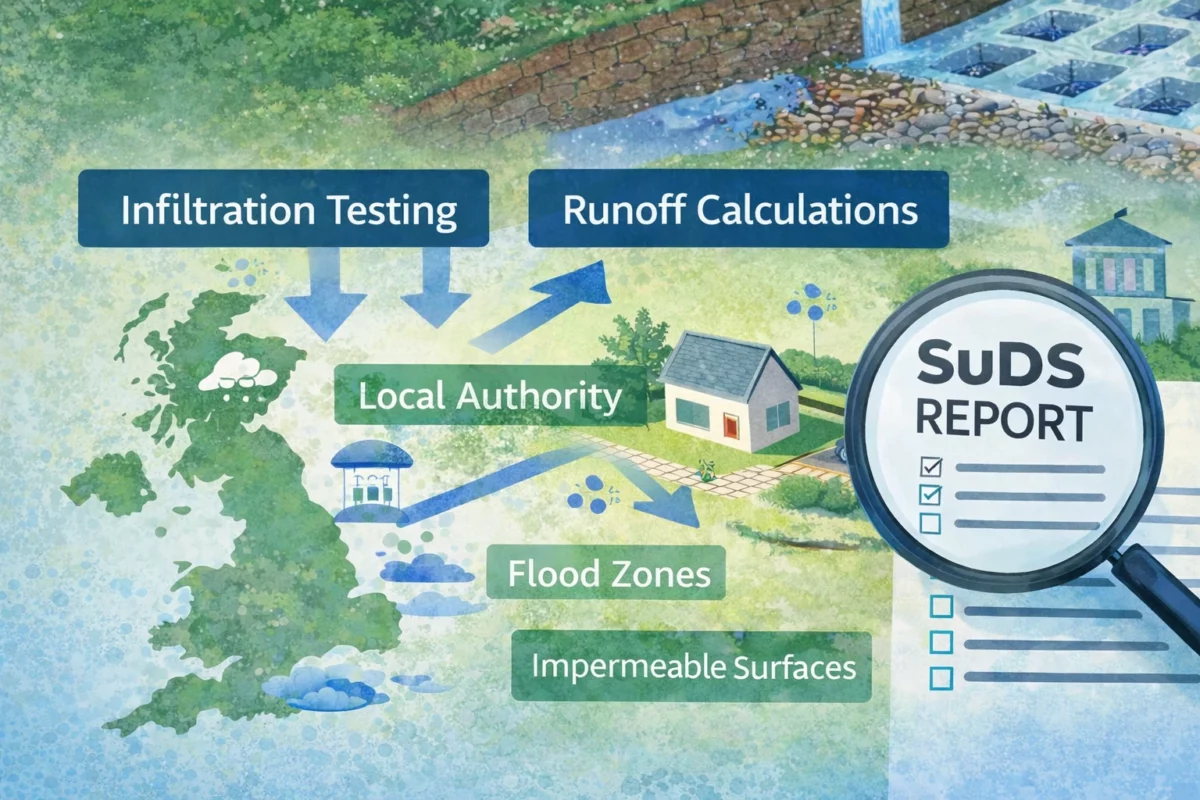
Proving that you have followed this hierarchy is essential for gaining planning approval. It requires a thorough site investigation, including infiltration testing (often called BRE365 testing), to determine exactly what the ground is capable of handling. Without this evidence, your strategy is likely to be rejected by the council’s drainage officers.
Practical features to include in your design
There is no one-size-fits-all approach to sustainable drainage. The features you choose will depend on the site’s topography, soil type, and the available space. However, a comprehensive SuDS Strategy will often utilise a ‘management train’ approach, where water passes through several different stages of treatment and storage. This might include a combination of the following features:
- Permeable Paving: This allows rain to soak through driveways and car parks into a sub-base layer, where it can be stored or slowly released.
- Green Roofs: These are excellent for urban areas with limited ground space, as they absorb rainfall and provide insulation for the building.
- Swales: Shallow, grass-lined channels that move water across a site while slowing it down and filtering out pollutants.
- Detention Basins and Ponds: These provide significant storage capacity during heavy storms and can be designed to stay dry most of the time or hold water year-round to support wildlife.
- Bio-retention Areas: Often seen as ‘rain gardens’ in streetscapes, these use specific soil mixes and plants to treat and manage runoff from roads and pavements.
The beauty of these features is that they can often be integrated into the existing landscaping. Rather than hiding the drainage system in expensive underground plastic crates, you can use the natural landscape to do the work for you. This often results in lower long-term maintenance costs and a much more pleasant environment for the people living or working on the site.
Navigating the planning process with a SuDS Strategy
In recent years, the rules surrounding drainage have become much stricter. The introduction of Schedule 3 of the Flood and Water Management Act 2010 in various parts of the UK means that SuDS are now a mandatory requirement for almost all new developments. This means that your SuDS Strategy needs to be prepared early in the design process, rather than being an afterthought once the buildings have already been laid out.
Early engagement with the Lead Local Flood Authority is highly recommended. By discussing your drainage proposals at the pre-planning stage, you can identify potential issues before they become expensive problems. For example, if you find out late in the day that the council requires a specific greenfield runoff rate that your current design cannot meet, you might have to redesign the entire site layout to accommodate larger storage basins.
A professional strategy should include detailed calculations, a clear map of the proposed drainage layout, and a long-term maintenance plan. Councils want to know who will be responsible for looking after the swales and basins ten or twenty years down the line. Whether it is a private management company or the local water authority taking over the assets, having a clear plan for the future is vital for getting that final stamp of approval.
The long-term value of getting it right
While some might see a SuDS Strategy as another hurdle in the planning process, it is actually an opportunity to create better developments. Climate change is making intense rainfall events more frequent, and traditional drainage systems are simply not built to cope with the new reality. By investing in a high-quality sustainable drainage design now, you are protecting the property from future flood risk and ensuring it remains viable for decades to come.
Furthermore, there is a growing body of evidence that green and blue infrastructure—the technical terms for water and plant-based systems—increases property values. People prefer to live in areas with trees, clean air, and visible nature. A development that manages its water through beautiful rain gardens and ponds is often more attractive to the market than one that is entirely covered in asphalt. In this sense, a good drainage strategy isn’t just about water management; it’s about creating a better place for people to live.
When you sit down to plan your next project, think about how the water will move across the land. Consider how you can use the natural features of the site to your advantage. By taking a proactive and thoughtful approach to your drainage, you can navigate the complexities of the UK planning system with confidence, knowing that your development is built on a solid, sustainable foundation.

William Rhoads is passionate about creating harmonious environments where pets and home décor coexist beautifully. His work centers on innovative solutions for pet care, combined with interior design inspiration.